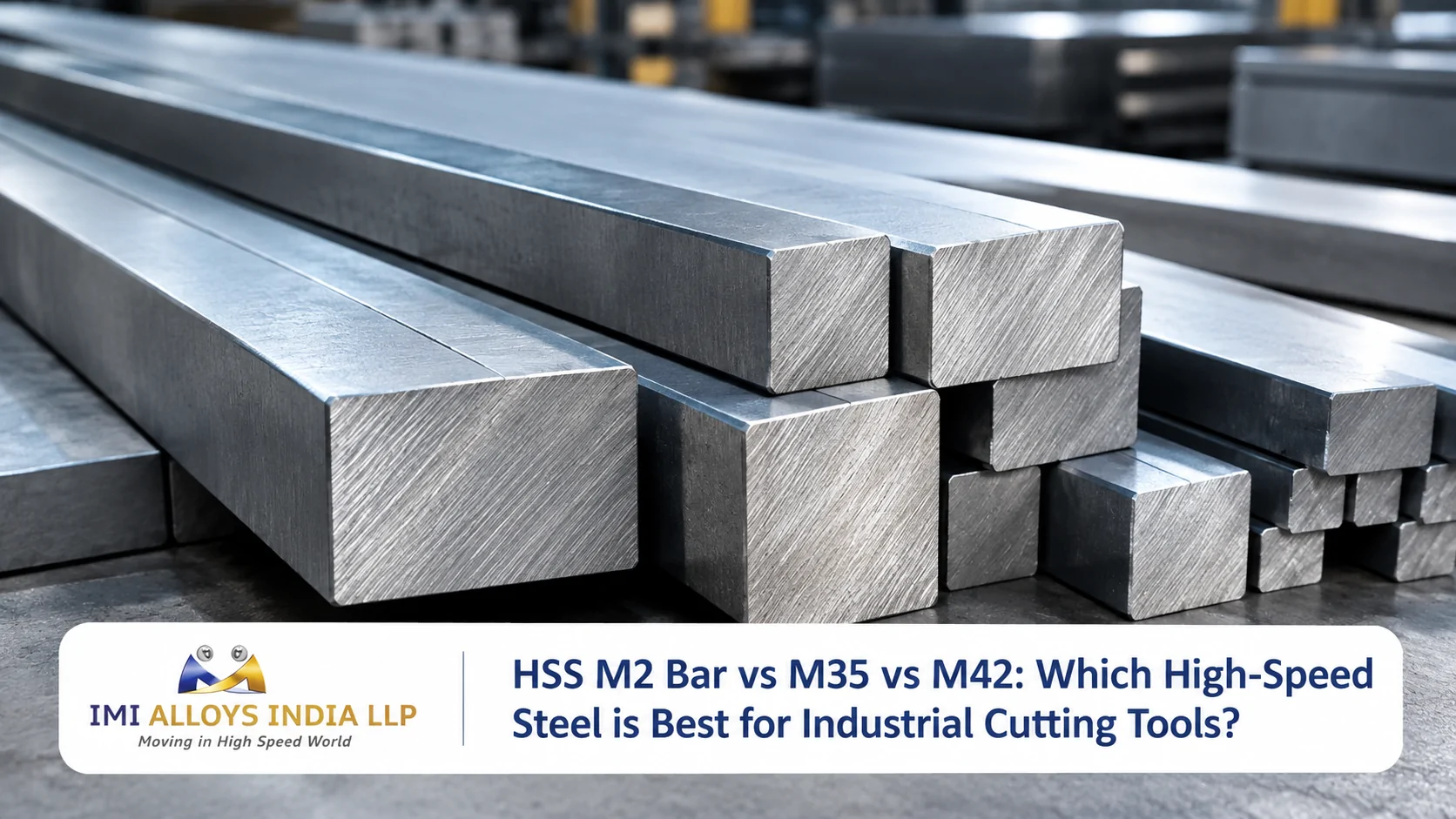
High-speed steel holds a cutting edge at temperatures near 600°C, a threshold that ordinary carbon tool steel cannot survive without softening. Among HSS grades, M2 Steel Rod dominates workshop floors worldwide, prized for cutters, drills and reamers that run at sustained speed. Engineers rarely select it without comparison, though. M35, M42 and T1 grades each bring different combinations of hardness, wear resistance, toughness and heat tolerance to the table. The right choice depends on operating temperature, workpiece hardness, and total tooling cost across the tool’s service life.
Understanding M2 Steel Rod and Its Material Characteristics
Molybdenum-based high-speed steel classification places M2 firmly in the general-purpose category. Its alloy balance explains why the grade performs consistently across a wide span of machining tasks.
Chemical Composition of M2 Steel Rod
M2 steel carries roughly 6% tungsten, 5% molybdenum, 4% chromium, 2% vanadium and 0.85% to 1.00% carbon. Molybdenum and tungsten form hard carbides that resist abrasion at high temperatures. Chromium increases hardenability during heat treatment while vanadium refines grain structure and increases wear resistance, giving the alloy a balance that makes M2 Steel Rod suitable for demanding cutting operations.
Core Performance Properties
Heat-treated M2 reaches 64 to 66 HRC, giving it wear resistance well beyond standard carbon tool steels. Red hardness holds to 600°C, keeping cutting edges intact under sustained high-speed friction. Toughness is still sufficient to prevent chipping during interrupted cuts. Dimensional stability from hardening allows for tight tolerances over long production runs, which is a contributing factor to reducing regrind frequency on precision tooling.
Why M2 Steel Rod Remains an Industry Standard
Cost and performance rarely align this well in tool steel. M2 delivers 64 to 66 HRC hardness at a price point well below cobalt-bearing grades, which explains its continued dominance across cutting tool manufacturing. Versatility matters too. The same bar stock feeds drills, milling cutters and punch tooling without requiring a separate alloy for each application. Stockists supplying high-speed steel round bars in standard and custom diameters keep production lines moving without long lead times.
Common Engineering and Tooling Applications
Cutting tools, twist drills and taps rely on M2 for its combination of hardness and toughness. Milling cutters and reamers hold sharp geometry through extended runs at moderate speed. Punches, dies, and industrial tooling components benefit from the grade’s dimensional stability, which reduces rework during the finishing stage.
Alternative High-Speed Steels Commonly Compared with M2
Engineers weigh three HSS grades against M2 most often when operating conditions push past general-purpose limits. Cobalt content, tungsten ratio, and carbide density separate one grade from the next.
M2 Steel Rod vs M35 High-Speed Steel
M35 adds 5% cobalt, raising red hardness by roughly 15°C over standard M2. This extra margin matters in continuous high-temperature machining, where M2 edges soften faster under sustained friction.
M2 Steel Rod vs M42 High-Speed Steel
M42 carries 8% cobalt and reaches 67 to 70 HRC after heat treatment, exceeding M2 on both counts. Hardened M42 machines difficult materials such as titanium and high-nickel alloys with less edge wear.
M2 Steel Rod vs T1 High-Speed Steel
T1 relies on tungsten rather than molybdenum as its primary carbide former. It costs more than M2 and offers similar cutting performance, which is why molybdenum-based grades have largely replaced it in modern tooling.
Comparing Performance Factors That Influence Material Selection
Four criteria drive most HSS selection decisions: hardness, wear resistance, heat tolerance, and toughness. Each factor pulls against the others to some degree.
Hardness and Edge Retention
Higher hardness extends the interval between resharpening cycles. M42 at 70 HRC holds an edge roughly 20% longer than M2 in continuous cutting trials on hardened steel. Tool life expectations shift accordingly across grades, and buyers should weigh the resharpening cost saved against the higher purchase price of cobalt grades.
Wear Resistance
Abrasion resistance determines how fast a cutting edge loses geometry under repeated contact. The vanadium-rich grades are superior to the standard tungsten steels in resistance to surface degradation. Increased wear resistance means longer maintenance intervals and less downtime on high-volume production lines.
Heat Resistance and Red Hardness
Red hardness measures how well a tool retains cutting hardness at elevated temperatures. M2 holds to 600°C. Cobalt grades push that ceiling toward 620°C to 650°C, a difference that matters most in high-speed machining where friction generates continuous heat at the tool tip.
Toughness and Resistance to Chipping
Interrupted cuts and shock loading demand toughness over raw hardness. M2 balances both properties better than harder cobalt grades, which can chip under impact despite superior wear resistance. Selecting the right grade means weighing hardness against the risk of brittle failure in the specific application.
Selecting the Right High-Speed Steel for Specific Engineering Applications
Matching HSS grade to the application avoids both overspending and premature tool failure. Four scenarios cover most engineering decisions.
General-Purpose Machining Applications
Standard turning, drilling, and milling on mild and medium-carbon steel run efficiently on M2. The grade’s 64 to 66 HRC hardness and moderate cost make it the default choice unless a specific constraint pushes toward an alternative.
High-Temperature Cutting Operations
Continuous high-speed cutting that generates sustained tip temperature above 550°C favors cobalt-bearing grades such as M35 or M42. The added red hardness prevents premature edge softening during extended runs without coolant breaks.
Heavy-Duty Wear Applications
The higher wear resistance of M42 justifies the higher cost for abrasive workpiece materials and for long production runs. The extended tool life will eventually compensate for the price difference when factoring resharpening frequency and downtime into the total cost.
Cost-to-Performance Considerations
Lifecycle value matters more than sticker price. A tool that lasts twice as long at a 40% higher cost still reduces total spend once labor, downtime, and resharpening are included in the calculation.
Advantages and Limitations of M2 Steel Rod Compared to Other HSS Grades
Key Advantages of M2 Steel Rod
M2 balances hardness, toughness, and wear resistance better than most single-purpose HSS grades, which keeps it viable across drilling, milling, and punching applications alike. Broad industrial acceptance means machinists already understand its grinding and heat treatment behavior. Cost-effective performance across diverse applications keeps M2 the default stock item at most tool steel suppliers.
Situations Where Alternative HSS Grades May Be Preferred
Cobalt-bearing grades are used for high-temperature applications above 600°C due to their resistance to softening at elevated temperatures. M42’s extra hardness is advantageous in special nickel alloy, titanium and hardened steel machining. Premium grades may be the better option for applications requiring high wear resistance for long periods.
Key Engineering Considerations Before Choosing M2 Steel Rod
Selecting the correct high-speed steel grade requires weighing six operating factors together rather than in isolation.
- Operating temperature at the cutting edge determines whether standard or cobalt-bearing grades perform better.
- Workpiece material hardness and composition affect wear rate and required tool hardness.
- Tool life expectations set the acceptable resharpening interval for the application.
- Machining speed requirements influence how much heat builds up at the tool tip during operation.
- Maintenance and replacement costs shift the lifecycle value calculation between grades.
Overall production efficiency goals determine whether upfront material cost or long-term tool life matters more.
Conclusion
The performance of M2 Steel Rod and its alternatives varies in different machining conditions. This is mainly due to their hardness, wear resistance, toughness and heat tolerance properties. These factors are taken into account by engineers in selecting a reliable material for specific components and operating temperatures. M2 remains the standard for general-purpose tooling due to its performance and cost. IMI Alloys India LLP supplies M2 Grade Round Bars and other HSS grades with customized solutions to meet specific application needs.