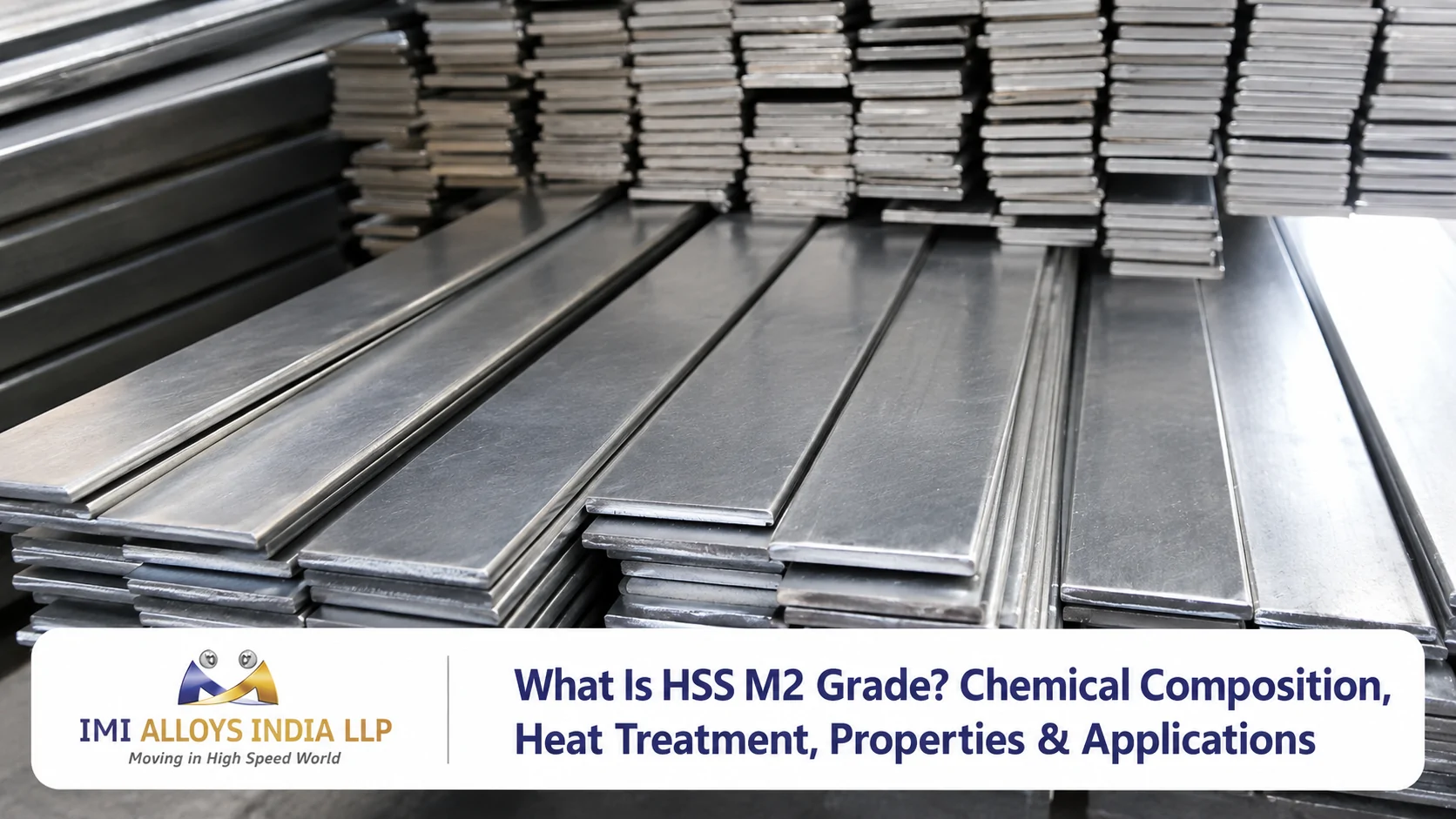

HSS M2 grade is a molybdenum-type high-speed tool steel, used a lot in drilling, milling, and threading. Hardness, wear resistance, hot hardness, and toughness decide how long a tool lasts once cutting. This blog covers the composition, heat treatment, properties, and applications of HSS M2 grade.
What Is HSS M2 Grade?
HSS M2 grade is a high-speed tool steel designed for cutting jobs that involve repeated heat and stress. It is of the molybdenum type and differs from tungsten-heavy high-speed steels. Carbon, chromium, molybdenum, tungsten and vanadium all do a bit of work. M2 steel is more resistant to softening and wear than ordinary steel , so it is used for tools that are subjected to friction and repeated cutting loads.
HSS M2 Grade Chemical Composition
A few elements give HSS M2 grade its properties. Carbon controls hardness and helps form carbides. Chromium helps with hardenability. Molybdenum and tungsten keep the steel strong at high temperatures. Vanadium adds wear resistance through more carbide formation. Composition varies by supplier, so check figures against the material spec you’re working to.
| Alloying Element | General Role in HSS M2 |
| Carbon | Hardness and carbide formation |
| Chromium | Hardenability |
| Tungsten | Hot hardness and wear resistance |
| Molybdenum | High-temperature strength |
| Vanadium | Wear resistance and carbide formation |
Key Properties of HSS M2 Grade
High Hardness
Cutting edges need to be hard, otherwise they deform under load, keeping the tool’s shape steady while machining.
Wear Resistance
M2 steel holds up well against abrasive wear from the workpiece, giving longer tool life in the right applications.
Hot Hardness
Cutting temperatures rise quickly in high-speed work. HSS M2 grade keeps its hardness as things heat up.
Toughness
A tool also needs enough toughness so it doesn’t chip under load. M2 grade strikes a reasonable balance, but it isn’t the toughest tool steel for every job.
How Does Heat Treatment Affect HSS M2 Grade?
Heat treatment of HSS M2 grade needs to be controlled to ensure it has the hardness, toughness and wear resistance as intended.
Preheating
Controlled heating before the main cycle cuts thermal stress and lowers distortion risk.
Austenitising
The steel gets heated to the range set out in the procedure being followed, preparing the microstructure for hardening.
Quenching
Controlled cooling comes next, turning the microstructure into the hardened state the tool needs.
Tempering
Depending on the process, there might be more than one tempering cycle, relieving stress and balancing hardness against toughness.
Exact heat-treatment temperatures shouldn’t be quoted unless checked against the relevant standard or data sheet for the HSS M2 grade being supplied.
Why Is HSS M2 Grade Used for Cutting Tools?
Hardness and wear resistance keep a cutting edge working through repeated passes. HSS M2 grade doesn’t soften as easily at higher temperatures, where lower-grade steels start to fail. These properties suit repeated machining in drilling, milling, and threading. Performance still depends on tool geometry, heat treatment, coatings, machining conditions, and the material being cut. There’s no fixed tool life you can guarantee across every job.
Common Industrial Applications of HSS M2 Grade
Drills and Reamers
Used in hole-making work, mostly because M2 grade holds up to wear during repeated cutting.
Milling and Cutting Tools
Cutters used in general machining benefit from the hot hardness in HSS M2 grade.
Taps and Threading Tools
Thread-cutting needs the edge to stay sharp, and M2 steel supports that.
Punches and Tooling Components
Some cold-working jobs use M2 grade where its hardness and wear resistance suit the process.
HSS M2 Grade vs Other Tool Steel Grades
Picking between HSS M2 grade and other tool steels comes down to hardness, wear resistance, toughness, and operating temperature. High-speed steel usually has the edge where sustained heat softens a conventional tool steel faster. But no one grade works for every job, and another tool steel might fit better depending on machining speed and material.
| Selection Factor | HSS M2 Grade | Other Tool Steel Grades |
| Primary Use | Cutting and machining tools | Application-dependent |
| Hot Hardness | High-speed steel performance | Grade-dependent |
| Wear Resistance | Strong | Grade-dependent |
| Toughness | Application-dependent | Grade-dependent |
| Selection | Based on tooling requirements | Based on application |
Factors to Consider When Selecting HSS M2 Grade Material
Start with product form, dimensions, and hardness needed, along with the heat-treatment condition required. The tooling application decides most of the machining requirements. Also check the applicable specification, surface condition, tolerances, and traceability needs.
Quality and Material Verification Before Purchase
Check that the HSS M2 grade quoted matches project needs, and look at composition documentation if required. Confirm dimensions, tolerances, hardness, and heat-treatment conditions against the spec. Ask for Material Test Certificates, and for critical orders, confirm batch traceability first.
Conclusion
HSS M2 grade remains a commonly used high-speed tool steel for demanding cutting work. Its composition, heat treatment, hardness, wear resistance, and hot hardness all play into performance under load. Getting material selection and heat treatment right matters for consistent results. iMetal India stocks and supplies HSS M2 grade material for tooling applications. Check the HSS M2 flat bars stockist and supplier page for available sizes and specifications.