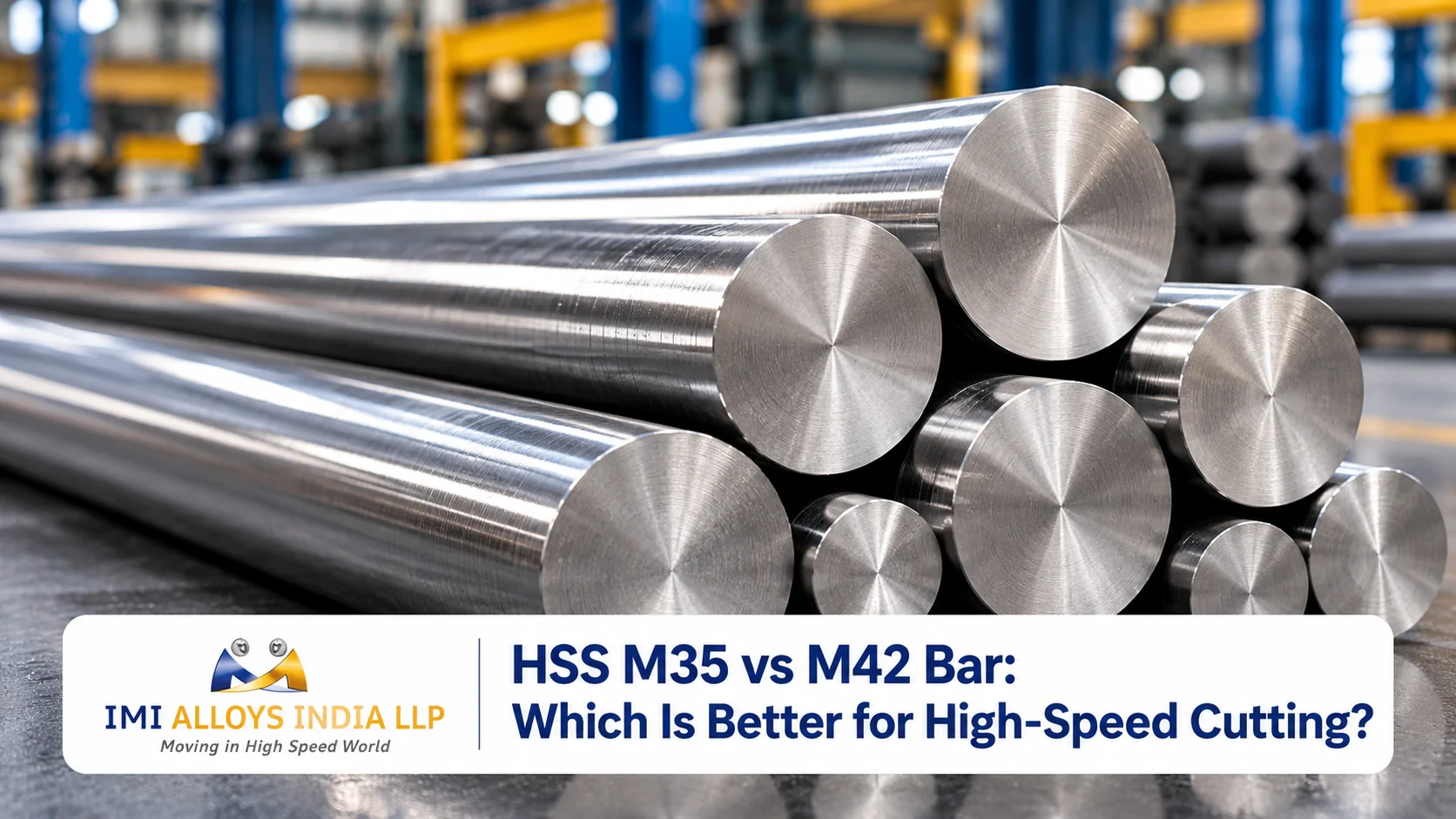
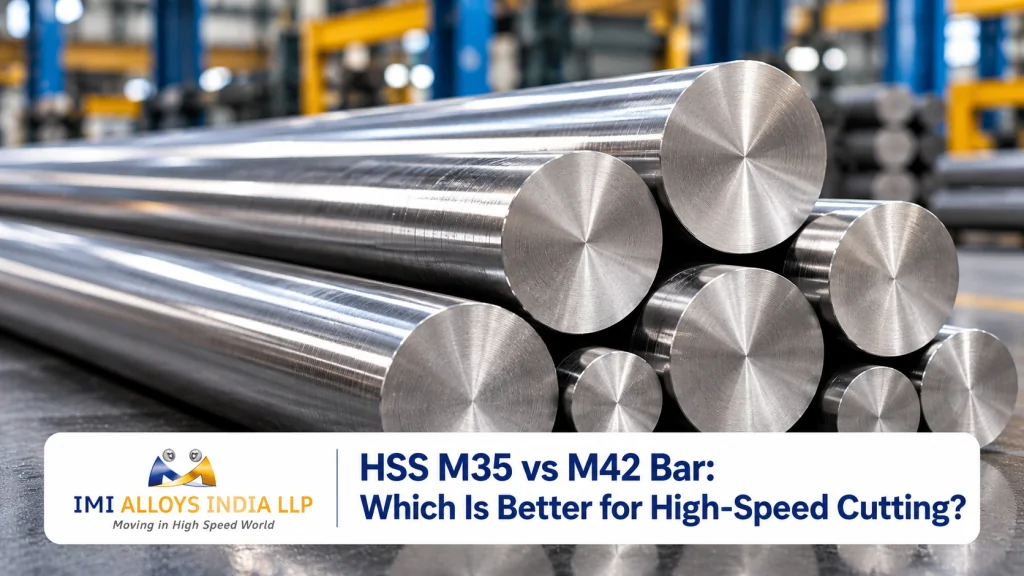
Cobalt is what separates these two tool steels from plain high-speed grades. M35 carries roughly 5% cobalt, M42 around 8%, and that gap changes how each one behaves once cutting temperatures rise. Hardness governs how long the edge resists deformation. Hot hardness decides whether the tool survives the heat generated at speed, while wear resistance and toughness control edge life and breakage risk. A HSS M35 bar and an M42 bar suit different jobs, so the choice follows cutting conditions, workpiece material and tool design.
What Is HSS M35 Bar?
M35 is a cobalt-bearing high-speed tool steel, built on an M2 base with cobalt added. Cobalt lifts the temperature at which the matrix begins to soften, so the cutting edge keeps its hardness as friction heat builds at the tool tip. Toolmakers cut drills, taps, milling cutters and reamers from it. Buyers sourcing a HSS M35 round bar generally want that middle ground: hardness and wear resistance for demanding work, with toughness left in reserve for interrupted cuts.
What Is HSS M42 Bar?
Higher cobalt defines M42, at roughly 8%, within a molybdenum-rich composition. Hardened and tempered correctly, it reaches a higher hardness level than M35 and holds it at elevated temperatures. Shops run it on materials that break edges down quickly. Tool geometry, heat-treatment practice and machining parameters still govern what any M42 tool actually delivers on the floor.
HSS M35 vs M42: Key Differences
Cobalt content, achievable hardness and intended duty mark the practical difference between the two grades.
| Comparison Factor | HSS M35 | HSS M42 |
| Cobalt Content | Approximately 5% | Approximately 8% |
| Hot Hardness | High | Generally higher potential |
| Hardness Potential | High | Generally higher |
| Wear Resistance | Grade and treatment dependent | Grade and treatment dependent |
| Typical Selection | General demanding cutting applications | High-hardness cutting applications |
| Final Choice | Based on machining requirements | Based on machining requirements |
Both grades reach their rated properties only through correct hardening and tempering.
Key Properties of HSS M35 and M42 Bars
Hardness and Hot Hardness
Edges soften under heat. M42 holds hardness at higher cutting temperatures, while M35 performs well across moderate speed ranges.
Wear Resistance
Edge wear sets tool life. Carbide distribution, heat treatment and cutting geometry shape wear behaviour as much as grade selection does.
Toughness and Tool Reliability
Chipping ends a tool faster than gradual wear. Tempering practice, edge preparation and machine rigidity decide real reliability.
Applications of HSS M35 and M42
HSS M35 Applications
Drills, taps, reamers and milling cutters for general machining where hardness and toughness both carry weight.
HSS M42 Applications
High-performance drills and cutters for stainless, titanium and hardened steels demanding sustained hot hardness and edge retention.
Which Grade Is Better for High-Speed Cutting?
M35 covers most demanding general cutting where speeds stay moderate and the tool meets interrupted cuts, vibration or flex. M42 earns its place when cutting speed, workpiece hardness or restricted coolant access push edge temperature past what M35 tolerates. Weigh feed rate, coolant delivery, setup rigidity and tool geometry together. Higher hardness narrows the margin against chipping, so a harder tool does not automatically run longer. Trial both on the actual component before standardising.
Heat Treatment and Machining Considerations
Hardening and tempering decide the final hardness and toughness of the finished tool. Follow the grade-specific procedure supplied with the material. Overheating during austenitising coarsens grain, and insufficient tempering leaves retained austenite that undermines edge stability. On the machine, speed, feed, coolant flow and rake angle shift how much heat the edge absorbs.
Factors to Consider Before Buying HSS M35 Bar
Confirm the grade and product form first: round, square or flat. Check diameter, length and dimensional tolerance against your tool blank sizes. Verify chemical composition against the applicable specification, and confirm the supply condition, whether annealed for machining or already heat treated. Ask for mill test certificates and heat-number traceability. Match the grade to the cutting-tool application.
Conclusion
Cobalt content sets the two grades apart: M35 suits demanding general cutting, while M42 answers work needing higher hot hardness. Study your cutting speeds, workpiece material and cooling setup before committing to either. iMetal India stocks HSS M35 round bars in a range of sizes for tool manufacturing.