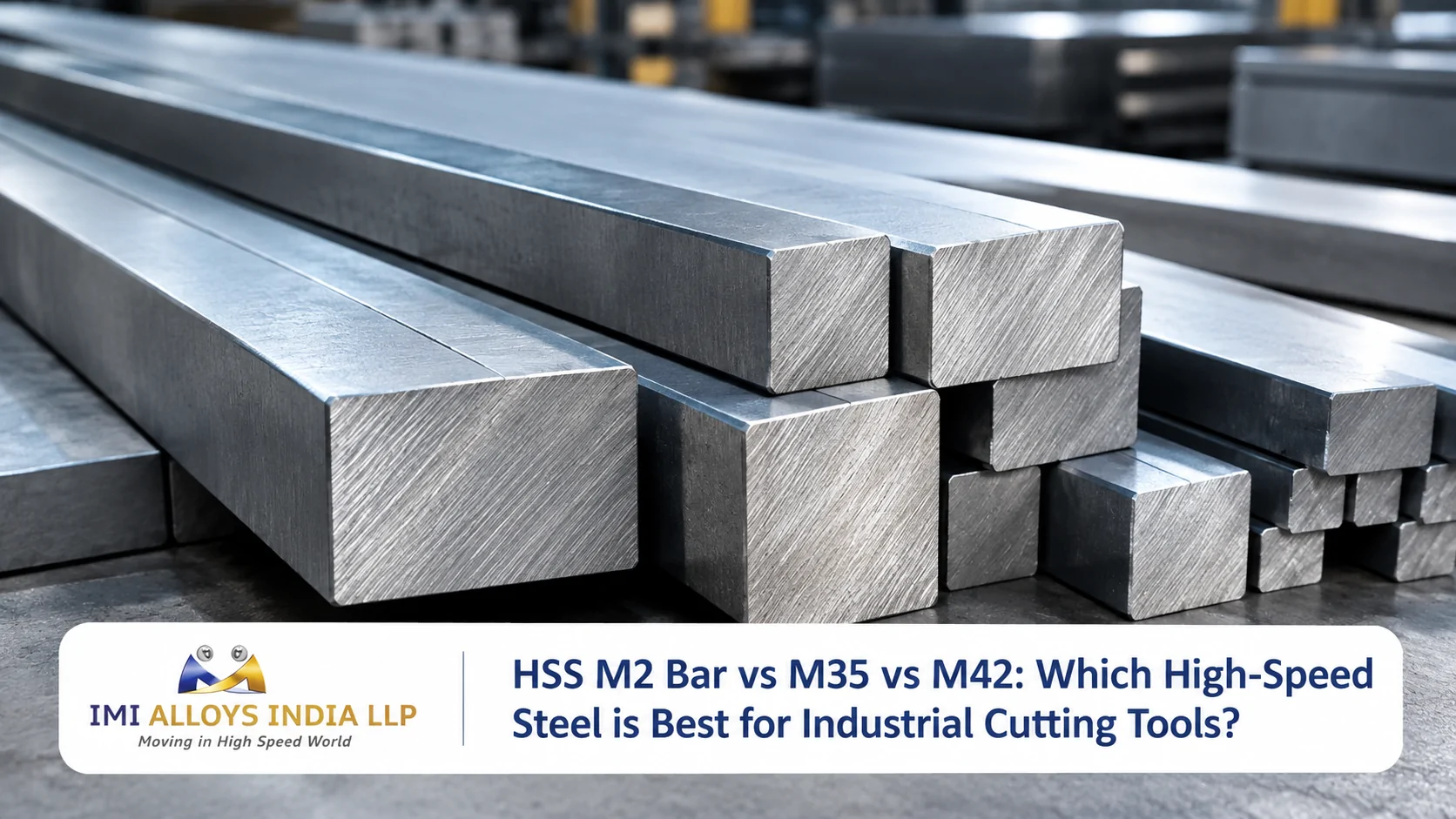

Selecting the wrong tool steel for a high-impact application costs far more than the price difference between grades. A punch that High Speed Steel is the most specified tool steel used for drills, taps, reamers, and milling cutters across machine shops that require one material to perform multiple tasks. Carbide cuts quicker in big production runs but holds up better under interrupted cuts and keeps its hardness even when the edge gets hot. This guide covers what HSS is made of, the M and T series, how M2, M35 and M42 compare, and when HSS makes more sense than carbide.
What Is High Speed Steel?
High Speed Steel is a tool steel with a high level of alloying, meant to cut at higher speeds and temperatures than plain carbon steel can handle. Suppliers usually stock it as round bars, square bars, flats and pre-ground blanks, ready to be made into drills, taps, reamers or cutter bodies.
Composition and Properties of High Speed Steel
Six elements decide how an HSS bar performs on the shop floor.
| Element | Function |
| Carbon | Hardness and wear resistance |
| Chromium | Hardenability and corrosion resistance |
| Molybdenum | Hot hardness and toughness |
| Tungsten | Heat resistance |
| Vanadium | Wear resistance and grain refinement |
| Cobalt | Higher red hardness and cutting speed |
More molybdenum and tungsten mean the edge holds up longer under heat. More vanadium means better abrasion resistance. Cobalt content pushes a grade toward harder, hotter jobs, at a higher price per kilogram.
Types of High Speed Steel: M Series vs. T Series
M Series grades use molybdenum as the main hardening element. They cost less to make and cover most general machining work. T Series grades use tungsten instead. This pushes cost up but holds performance steady in constant, heavy-duty cutting. Commonly, M Series grades like M1, M2, M35 and M42 make up most of what is in stock, mainly because they machine with less distortion and cost less than T Series bars.
| Feature | M Series HSS | T Series HSS |
| Primary Alloy | Molybdenum | Tungsten |
| Toughness | Higher | Moderate |
| Hot Hardness | Excellent | Excellent |
| Cost | More economical | Higher |
| Common Grades | M1, M2, M35, M42 | T1, T15 |
| Typical Applications | General machining | Heavy-duty cutting |
Composition & Properties of High Speed Steel
Six elements decide how an HSS bar performs on the shop floor.
| Element | Function |
| Carbon | Hardness and wear resistance |
| Chromium | Hardenability and corrosion resistance |
| Molybdenum | Hot hardness and toughness |
| Tungsten | Heat resistance |
| Vanadium | Wear resistance and grain refinement |
| Cobalt | Higher red hardness and cutting speed |
More molybdenum and tungsten mean the edge holds up longer under heat. More vanadium means better abrasion resistance. Cobalt content pushes a grade toward harder, hotter jobs, at a higher price per kilogram.
HSS vs Carbide: Which Cutting Tool Material to Choose?
Carbide beats HSS on raw cutting speed and tool life, especially in dedicated high-volume production. HSS costs less to start with, handles interrupted cuts better, and can be reground and reused rather than thrown away once it goes dull. Regrinding is important for toolrooms doing varied, low-to-medium-volume work, where the cost of buying fresh carbide inserts for each task adds up quickly.
| Feature | High Speed Steel | Carbide |
| Toughness | Higher | Lower |
| Hardness | High | Very High |
| Cutting Speed | Moderate | Very High |
| Tool Life | Good | Excellent |
| Cost | Lower | Higher |
| Regrinding | Easy | More difficult |
| Best Applications | General machining | High-volume production |
Applications of HSS in Cutting Tools
Drill bits use more HSS than any other tool type, from ordinary jobber-length twist drills to heavier industrial drilling tools that need a tough core. Taps and threading tools use HSS because the edge geometry cuts clean threads without breaking them. End mills, slot drills and face mills use it for the same reason: the edge holds up through interrupted cuts that would chip a carbide tool. In aerospace and precision engineering work, M35 and M42 are used most on stainless steel and superalloys.
How to Select the Right HSS Grade for Machining
Stainless steel needs the extra red hardness in M35. Titanium, nickel alloys and other high-strength materials need M42. A shop running one part multiple times might do better with carbide. A toolroom that machines several materials in a week gets more value from having a range of grades on hand.
| Machining Requirement | Recommended Grade |
| Mild Steel | HSS M2 |
| Stainless Steel | HSS M35 |
| Titanium and Nickel Alloys | HSS M42 |
| General Workshop Use | HSS M2 |
| Heavy-Duty Industrial Machining | HSS M42 |
Conclusion
High Speed Steel still performs the majority of cutting tool work across general engineering, and the choice between M2, M35, and M42. Choosing the right carbide depends on the material being machined and the volume being produced. M2 covers routine steel work, M35 and M42 handle stainless steel and superalloys, and carbide takes over where speed matters more than toughness. Match the grade with the project before ordering bar stock, and tool life follows. IMI Alloys India LLP stocks HSS bars across these grades for tool manufacturers that need to get that call right.