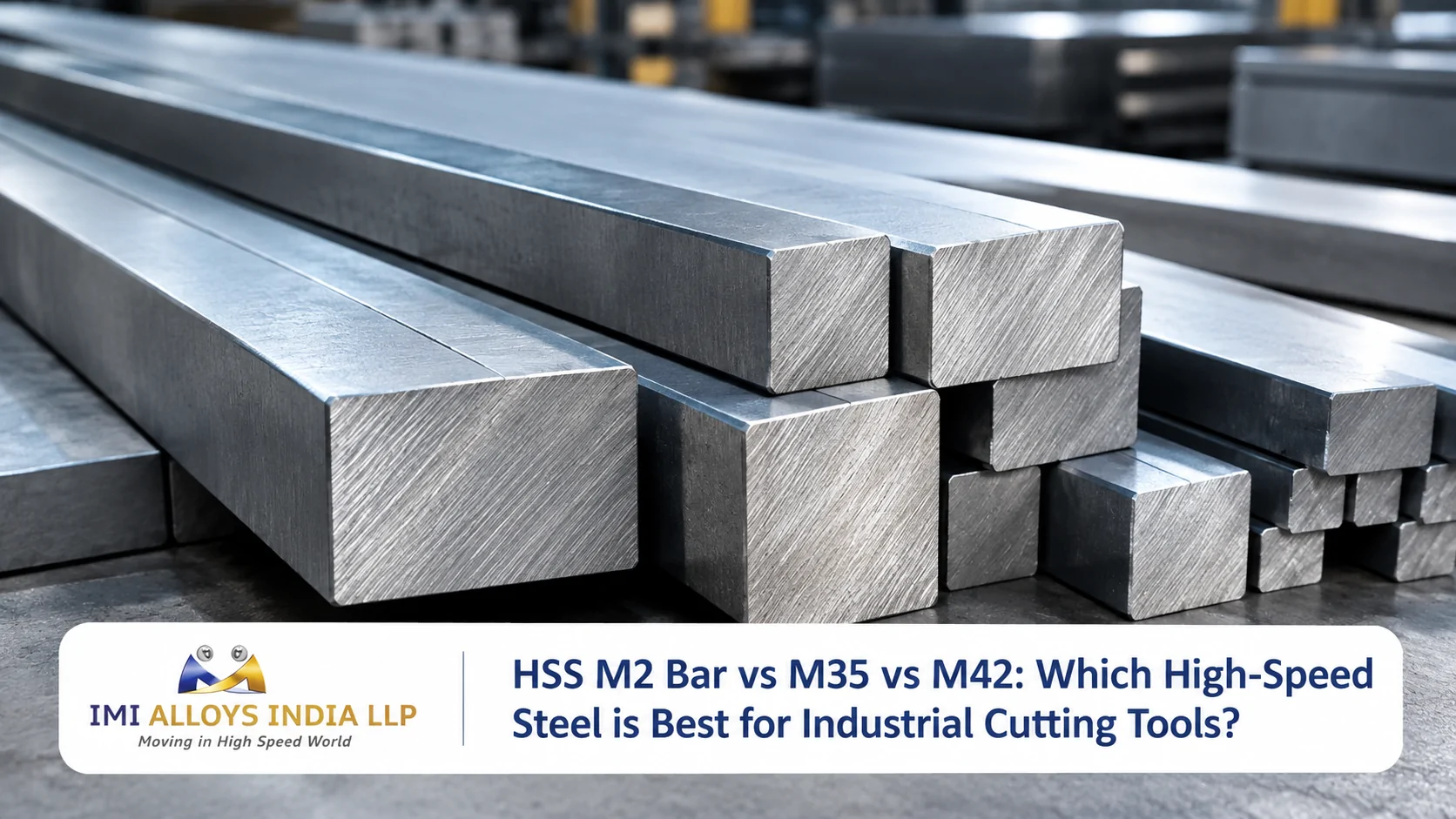

Industrial cutting tools depend on high-speed steel to survive friction, heat, and repeated mechanical load. M2, M35, and M42 each bring a different mix of hardness, wear resistance, and hot hardness. The right grade depends on cutting speed, workpiece material, and heat generated during machining, starting with the widely used hss m2 bar.
Why Does High-Speed Steel Grade Selection Matter for Cutting Tools?
Every cutting edge fights friction, heat, and mechanical stress at once. Drilling stainless steel generates different thermal loads than milling mild steel. Hardness alone will not save a tool if toughness runs short and the edge chips under load. Selecting a grade purely for maximum hardness ignores red hardness and impact resistance.
What Is HSS M2 Bar?
HSS M2 bar is a molybdenum-type high-speed steel used in drills, milling cutters, and general industrial tooling. The composition is a balance of hardness, wear resistance and toughness to provide for many machining operations without increasing cost more than is necessary. M2 is used by manufacturers for tools that need to retain an edge through repeated cycles and resist chipping under normal loads. Final performance still depends on heat treatment and tool geometry.
What Is M35 High-Speed Steel?
M35 adds cobalt to the standard formula, lifting high-temperature cutting performance above what M2 typically delivers. Cobalt slows the rate at which hardness drops as temperatures climb. This suits tougher machining conditions, including harder alloys and sustained-heat applications. M35 does not automatically outperform M2 in every job; the gain shows up where elevated temperature is the limiting factor.
What Is M42 High-Speed Steel?
M42 carries higher cobalt content than M35 and targets applications where hot hardness and wear resistance both matter. Tools made from M42 hold their edge at temperatures that would soften lower-alloy steels faster. Aerospace alloys, hardened steels, and high-speed continuous cutting are typical territory. Higher performance comes at a higher price, so buyers should weigh tool cost against the actual severity of the application.
HSS M2 vs M35 vs M42: Key Property Differences
Wear resistance rises with cobalt content, moving from M2 to M35 to M42. Hot hardness follows the same direction, with M42 retaining hardness at temperatures that push M2 past its limit. Toughness depends on the application and heat treatment rather than a fixed ranking, and cost rises with cobalt content, keeping M2 the more economical choice.
| Property | HSS M2 | M35 | M42 |
| High-Speed Steel Type | Molybdenum HSS | Cobalt HSS | High-cobalt HSS |
| Wear Resistance | High | High | Very high |
| Hot Hardness | Good | Higher | Very high |
| Toughness | Good balance | Application-dependent | Application-dependent |
| General Use | General-purpose cutting tools | More demanding machining | Severe cutting conditions |
| Relative Cost | Lower | Higher | Generally higher |
Note: Avoid relying on exact hardness values unless verified against the relevant material specification and heat-treatment condition.
Chemical Composition Differences Between M2, M35 and M42
Tungsten and molybdenum form the backbone of all three grades, contributing to red hardness through carbide formation. Vanadium adds wear resistance through hard, stable carbides. M35 and M42 both add cobalt, while standard M2 carries no significant cobalt addition, and this is why the cobalt grades suit hotter operations. Verify exact composition ranges against the applicable specification before procurement.
| Alloying Focus | M2 | M35 | M42 |
| Tungsten/Molybdenum | Present | Present | Present |
| Vanadium | Present | Present | Present |
| Cobalt | No significant cobalt addition | Cobalt alloyed | Higher cobalt content |
| Selection Focus | Balanced performance | Improved hot hardness | High-temperature cutting performance |
Which Grade Performs Better in Different Cutting Conditions?
General-Purpose Industrial Cutting
HSS M2 bar suits general cutting-tool work, balancing performance against material cost.
Higher-Temperature Machining
M35 becomes worth considering once cutting temperatures rise and hot hardness starts to matter for tool life.
Severe Cutting and High-Heat Applications
M42 fits severe, high-heat operations, though higher alloy content is not automatically the right choice for every job.
Typical Applications of M2, M35 and M42 High-Speed Steel
Drills made from these grades cut metals across general and precision machining. End mills and milling cutters rely on the same alloys for edge retention during material removal. Reamers need to hold close tolerances, pass after pass, and taps and threading tools need toughness to resist chipping. Saw blades are inherently wear resistant and specialised tooling generally blends grades by process.
Factors to Consider When Choosing Between M2, M35 and M42
The type of workpiece material establishes the baseline, as harder alloys produce more heat and wear than mild steel. Cutting speed determines how much heat builds up at the edge, and directly affects grade selection. The required hardness and wear resistance must be balanced against toughness to avoid chipping, and tool geometry, heat-treatment capability, tool life, material availability, and budget complete the decision.
When Is HSS M2 Bar the Right Choice?
HSS M2 bar fits most general-purpose cutting tools where extreme cobalt-alloyed performance is not required. It delivers a practical balance between hardness, wear resistance, and toughness, and often works out as the more economical option compared with M35 or M42. Final suitability still depends on the tooling application and the heat-treatment process applied to the bar.
Quality and Material Verification Before Procurement
Verify tooling design against required grade, chemical composition to applicable specification and bar dimensions and tolerances. Review material condition and heat-treatment requirements and order Material Test Certificates and traceability for industrial orders.
Conclusion
M2, M35, and M42 each serve distinct roles, moving from balanced general-purpose performance toward higher hot hardness and wear resistance as cobalt content increases. No single grade works best for every application. M2 remains cost-effective for general tooling, while M35 and M42 earn their place in hotter, more demanding conditions. iMetal India stocks all three grades for buyers who need verified material and consistent quality. Check available HSS M2 flat bar stock and specifications here.