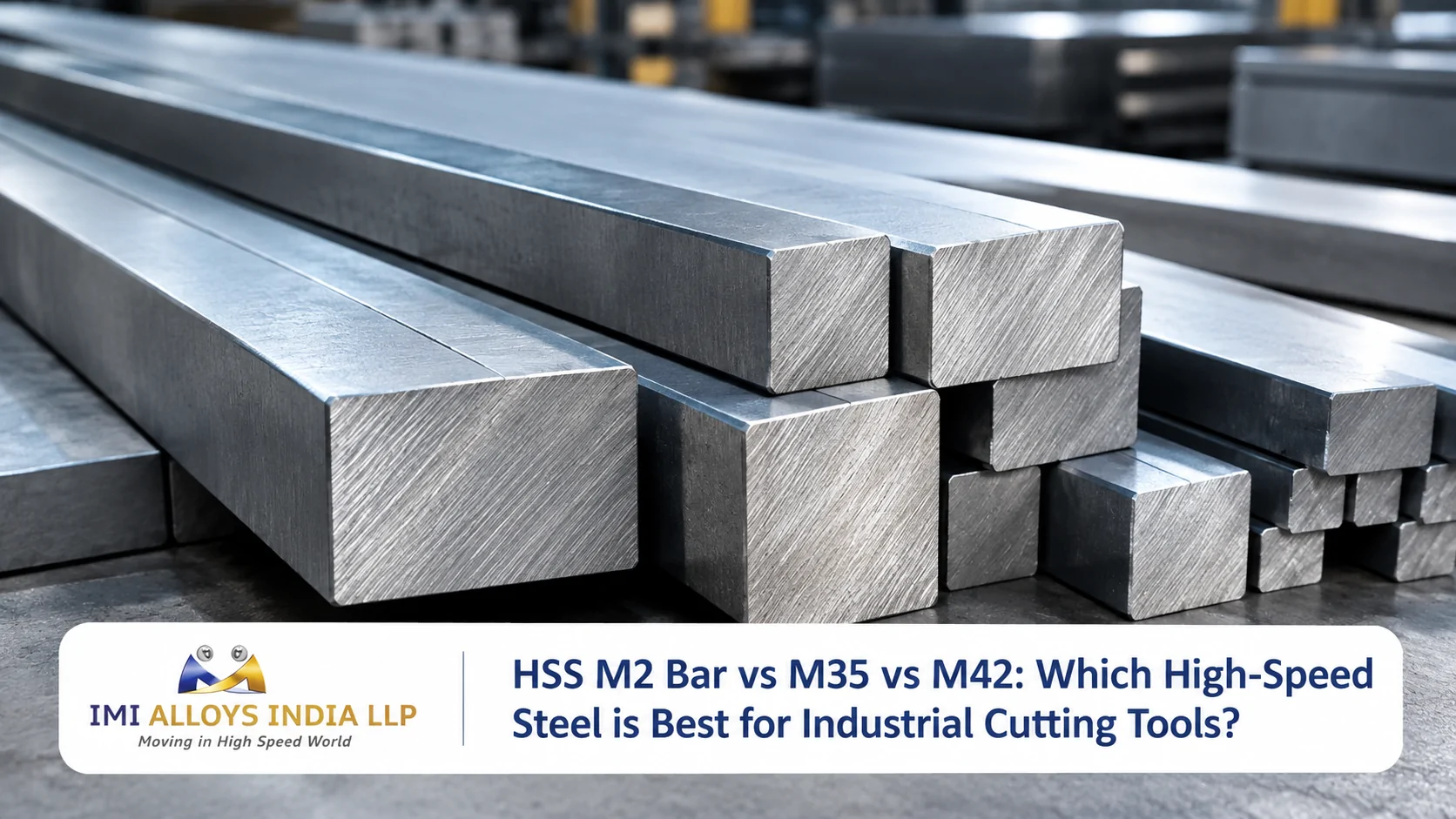
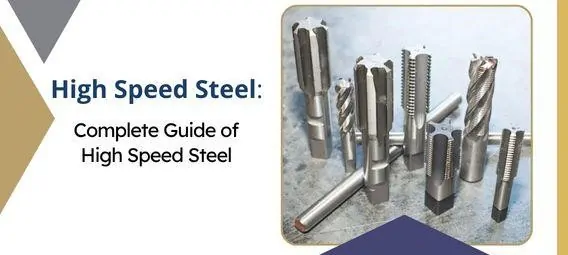
High speed steel holds its cutting edge near 600°C, far above the point where plain carbon tool steel softens. That property keeps HSS steel in demand for drilling, milling, and turning, even as carbide and ceramic tools spread. This guide covers how high speed tool steel is made, the main high speed steel grades, their chemistry, heat treatment, uses, and how to pick a grade.
What is High Speed Steel?
High speed steel is a family of high-carbon, high-alloy tool steels built to cut metal faster than carbon tool steel allows. Taylor and White developed it around 1900, and the name reflects the faster machining it enabled. Carbon tool steel loses hardness near 200°C. HSS steel holds most of its hardness to about 600°C, a trait called red hardness. That heat resistance, plus wear resistance and toughness under interrupted cuts, keeps high speed tool steel central to general tooling.
How High Speed Steel is Made (Manufacturing Process)
High speed steel moves from raw alloy to a finished bar through melting, refining, forming, and heat treatment stages.
Raw Material Selection
Producers alloy iron with tungsten, molybdenum, chromium, vanadium, cobalt, and carbon to set hardness, carbide content, and wear resistance.
Melting
An electric arc furnace melts the charge, then vacuum induction melting and degassing cut gas and oxide content.
Refining
Refining strips sulphur, phosphorus, and inclusions, then trims the chemistry to a tight compositional window.
Casting
Casting pours ingots, while the powder metallurgy route atomises the melt for a far more even carbide spread.
Forging
Forging breaks up coarse carbides, refines grain, and raises toughness and strength along the bar.
Annealing
Annealing softens the bar for machining and relieves internal stress before final hardening.
Heat Treatment
Hardening austenitizes near 1200°C, quenches, and tempers to build the hardness and red hardness of high speed tool steel.
Grinding and Finishing
Precision grinding sizes the bar, then inspection verifies dimensions, hardness, and structure before dispatch.
Types of High Speed Steel
High Speed Steel splits into families by main alloy, each balancing hardness, toughness, and cost differently.
Tungsten High Speed Steel (T-Series)
Tungsten grades like T1 and T15 carry 12 to 18 percent tungsten. Their hot hardness and wear resistance suit form tools and abrasive cutting.
Molybdenum High Speed Steel (M-Series)
Grades like M2, M35, and M42 swap tungsten for molybdenum. They cost less, resist decarburisation, and cover most drills, taps, and end mills, giving the M-series the largest share of high speed steel bars sold.
Cobalt High Speed Steel
Cobalt versions add 5 to 8 percent cobalt, which raises red hardness, extends tool life, and allows faster cutting on hardened work.
Powder Metallurgy High Speed Steel
Powder metallurgy grades, including ASP 2052, spread carbides evenly, giving better toughness, a finer edge, and longer life than cast high speed steel alloys.
High Speed Steel Grades
Each of the common high speed steel grades suits a different balance of hardness, toughness, and heat resistance.
M2
A molybdenum grade that balances hardness against toughness. M2 handles drills, taps, and cutters and remains the workhorse of general tooling.
M35
Essentially M2 with 5% cobalt added, which lifts hot hardness. M35 drills tough alloys where plain M2 loses its edge too quickly.
M42
A super HSS carrying 8% cobalt and reaching 68 to 70 HRC. M42 cuts hardened material and holds up under high thermal load.
T1
A tungsten grade with 18% tungsten and strong hot hardness. T1 turns work and forms tools where edge retention at heat matters most.
T15
A tungsten grade lifted by 5% vanadium for high wear resistance. T15 excels at abrasive cutting that would dull softer grades fast.
ASP 2052
A powder metallurgy grade with an even carbide structure and high toughness. ASP 2052 serves high-performance tools that demand consistency and long life.
Chemical Composition of High Speed Steel
Alloying elements decide how High Speed Steel performs. Tungsten and molybdenum drive hot hardness, chromium sets hardenability, vanadium forms wear-resistant carbides, cobalt raises heat resistance, and carbon feeds overall hardness.
| Grade | C | Cr | Mo | W | V | Co |
| M2 | 0.85 | 4.1 | 5.0 | 6.4 | 1.9 | – |
| M35 | 0.90 | 4.1 | 5.0 | 6.4 | 1.9 | 4.8 |
| M42 | 1.10 | 3.8 | 9.5 | 1.5 | 1.2 | 8.0 |
| T1 | 0.75 | 4.1 | – | 18.0 | 1.1 | – |
| T15 | 1.55 | 4.5 | – | 12.0 | 5.0 | 5.0 |
Balancing these elements lets each grade trade hardness for toughness to fit its cut.
Mechanical Properties of High Speed Steel
Hardened High Speed Steel pairs high hardness with strong compressive strength and stable behaviour under heat, which is why it outcuts softer tool materials.
| Property | Typical Value |
| Hardness | 63 to 67 HRC |
| Density | 8.0 to 8.7 g/cm³ |
| Tensile Strength | 850 to 2200 MPa |
| Compressive Strength | 3250 to 4200 MPa |
| Elastic Modulus | 210 to 230 GPa |
| Transverse Rupture Strength | 3000 to 4800 MPa |
| Wear Resistance | High |
| Thermal Conductivity | 19 to 24 W/m·K |
High hardness resists wear, compressive strength carries cutting loads, and heat-stable hardness keeps the edge sharp during continuous cuts.
Heat Treatment of High Speed Steel
Heat treatment gives High Speed Steel its working hardness. Each stage below plays a set role, and rushing any one shortens tool life.
- Annealing: Softens the bar for machining and relieves stress before hardening.
- Preheating: Warms the tool in stages to prevent thermal-shock cracking.
- Austenitizing: Heats near 1200°C so alloy carbides dissolve into the matrix.
- Quenching: Cools fast in oil, salt or gas to lock in hardness.
- Tempering: Reheats near 550°C to relieve stress and trigger secondary hardening.
Two or three tempering cycles clear retained austenite and stabilise the structure, maximising tool life, wear resistance, and hardness.
Advantages of High Speed Steel
High Speed Steel earns its place through a mix of properties few tool materials match at the same price.
- Wear resistance stays high, so edges hold their shape through long runs.
- Hardness of 63 to 67 HRC stands up to tough workpieces.
- Red hardness lets high speed tool steel keep cutting near 600°C.
- Toughness survives interrupted cuts that would chip carbide.
- Long life between changes cuts downtime on high-volume lines.
- Operators regrind HSS steel many times, stretching each tool’s service.
- HSS costs far less than carbide for general-purpose tooling.
- Shock resistance beats carbide on unstable or intermittent cuts.
- Machining stays predictable, so tolerances hold across a batch.
Applications of High Speed Steel
High Speed Steel shapes most cutting tools in industry, from hand tools to automated machining.
Cutting and Drilling Tools
Drill bits, milling cutters, end mills, reamers, and taps use HSS for edges that hold through repeated cutting at speed.
Forming and Shaping Tools
Gear cutters, dies, broaches, and punches shape and finish parts under heavy load and shock.
Sawing and Woodworking Tools
Saw blades and woodworking tools use HSS toughness to cut timber, board, and soft metals cleanly.
Automotive, Aerospace, and Manufacturing
These sectors fit HSS into CNC tooling for engine parts, structures, and precision assemblies at scale.
How to Choose the Right High Speed Steel Grade
Grade choice means matching the tool to the required service. Weigh these factors first.
- Match the grade to the workpiece material and its hardness.
- Higher cutting speeds call for cobalt or powder metallurgy grades.
- Rising operating temperatures favour grades with strong red hardness.
- Abrasive work needs higher vanadium content for wear resistance.
- Interrupted cuts and unstable setups need tougher grades.
- Weigh grade cost against the tool life the run demands.
- Let tool geometry and edge strength guide the choice.
- High production volume justifies a premium, longer-lasting grade.
Maintenance Tips for High Speed Steel Tools
A few habits keep High Speed Steel tools accurate and extend their working life.
Sharpening and Cutting Parameters
Sharpen on the correct wheel to restore edge geometry, and hold feeds and speeds to rated values so the edge does not dull early.
Coolant and Heat Control
Apply the right coolant at steady flow to clear chips and draw off heat, keeping the edge from overheating and losing hardness.
Storage and Inspection
Store tools dry and separated to prevent corrosion and chipping, and inspect edges often so worn ones reach regrinding in time.
Conclusion
High Speed Steel stays a dependable choice for cutting and tooling, balancing hardness, toughness, heat resistance and value in one material. From drills to CNC tooling, the right high speed steel grades hold tolerances tight and edges sharp. IMI Alloys India LLP supplies high speed tool steel and HSS steel bars in a wide range of grades and forms.