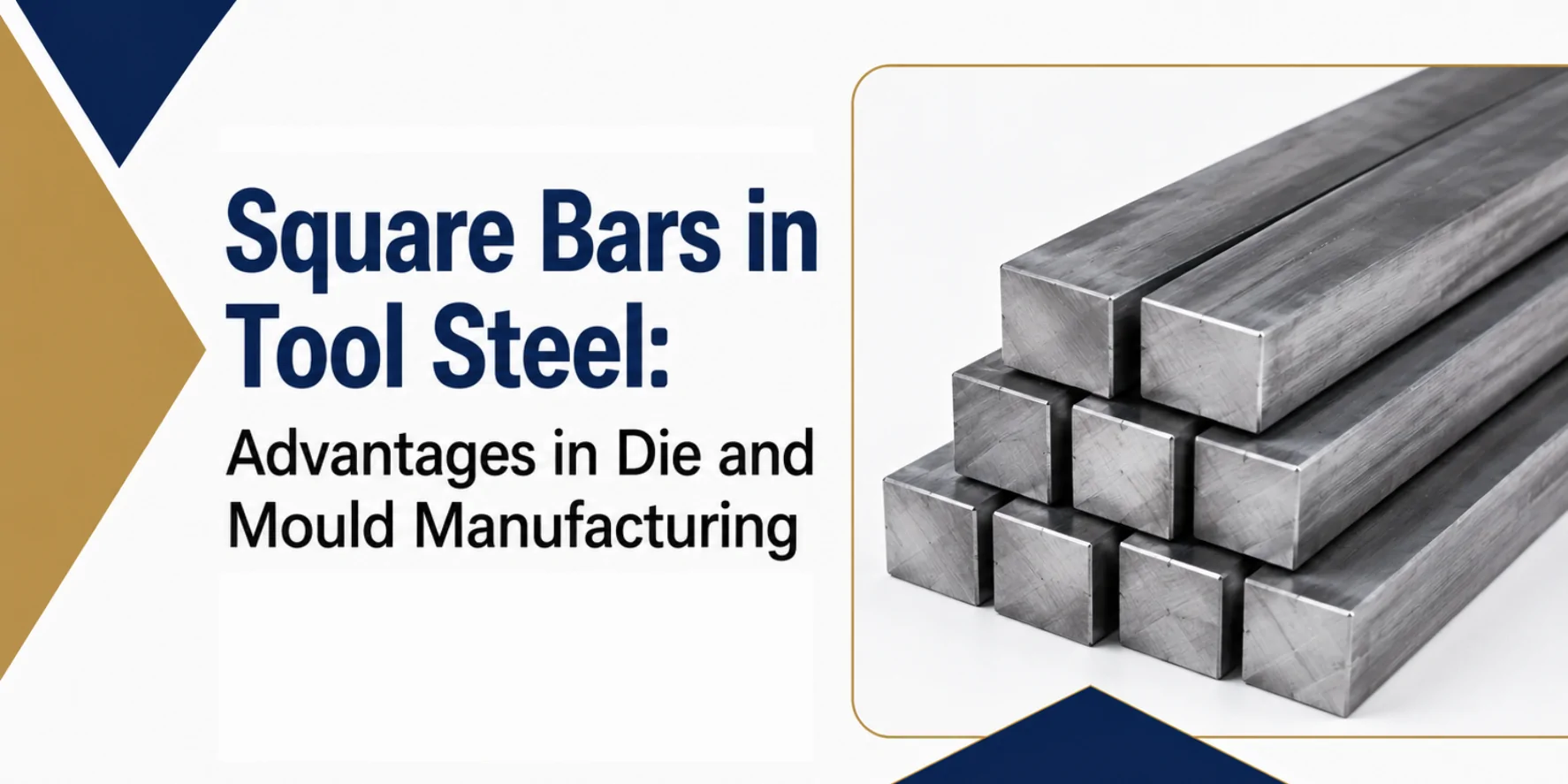
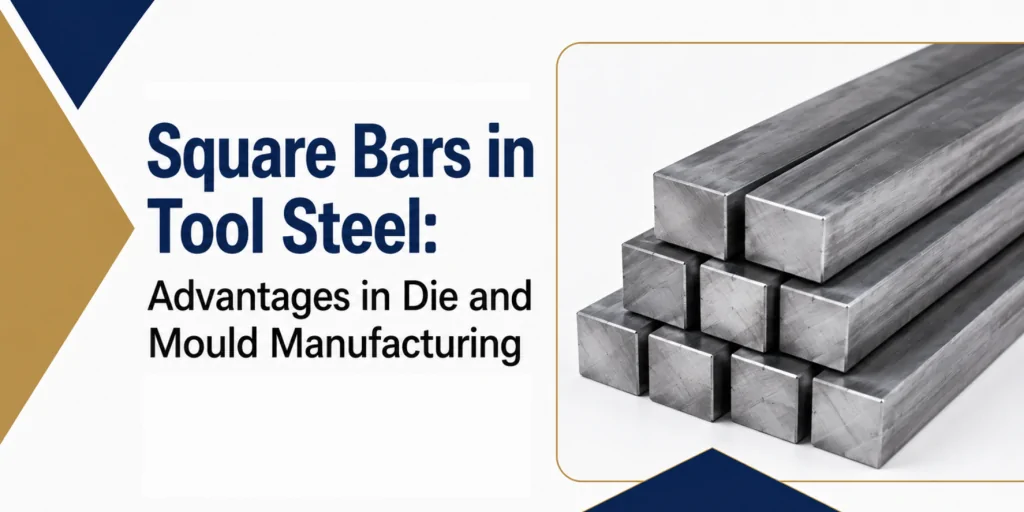
Tool steel square bars are commonly used for die and mold manufacturing. Since the shape of the raw material directly impacts dimensional accuracy, machining stability and production efficiency. Materials for precision tooling applications need to reduce set up, machining time and waste. This has led to an increased popularity of tool steel square bar in the tooling industries, as it offers better alignment, easier fixturing and improved machining efficiency in the manufacture of complex dies and molds than round or flat bar stock, whilst allowing consistent operation in high-precision manufacturing environments.
Understanding Tool Steel Square Bars
A square bar is a steel bar with equal width and thickness across its cross-section a geometry that directly supports the flat, rectangular block form that most tooling cavities, die sets, and mould plates take in finished form. Common manufacturing standards include DIN, AISI, and EN specifications depending on the tool steel grade. Available square bar sizes typically run from small cross-sections for precision inserts through large blocks for heavy-duty die sets, giving toolmakers the flexibility to select stock close to the finished part size.
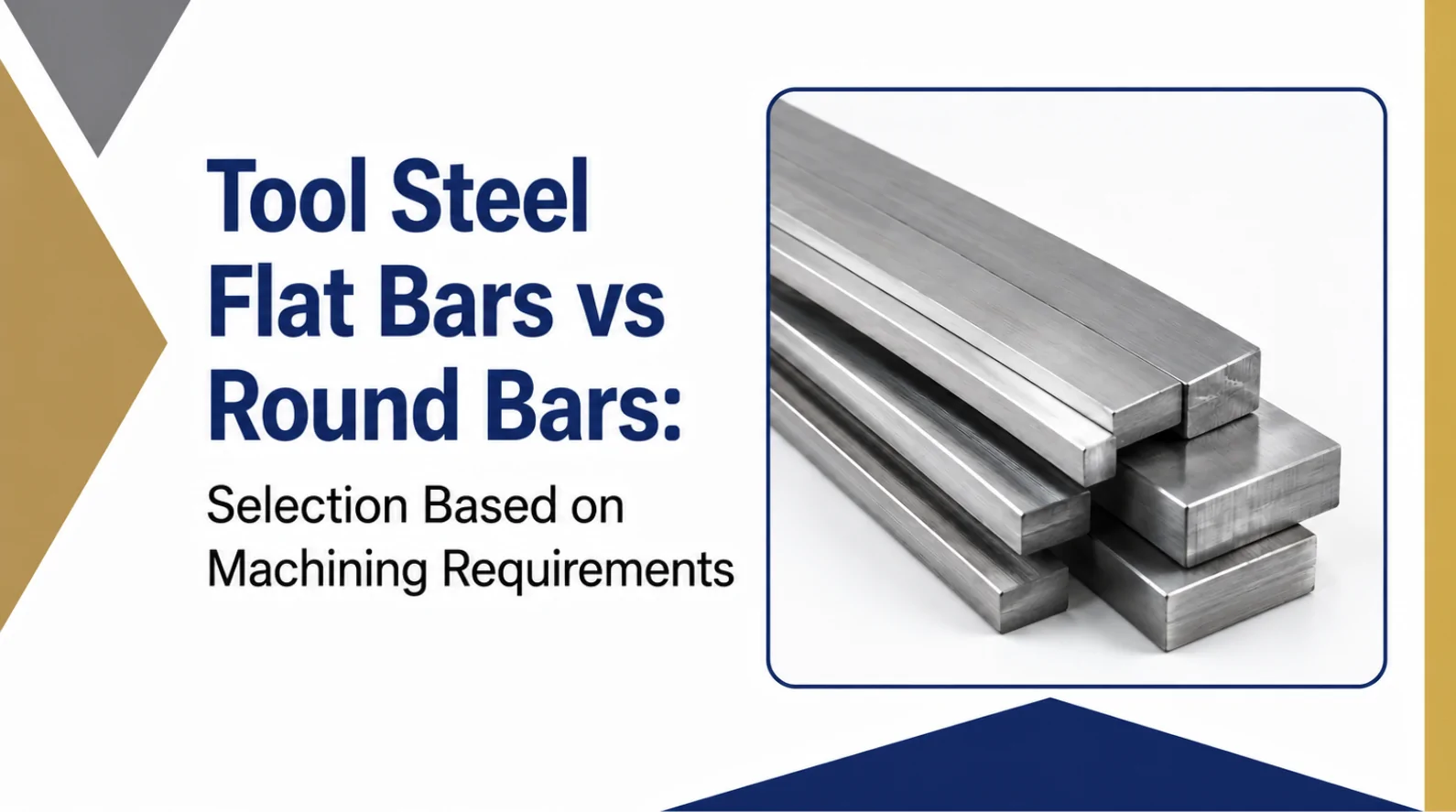
Square bars differ from round bars in that they require no initial profiling step to establish flat reference surfaces; the material arrives with the flat faces a machinist needs. Compared to flat bars, square bars offer equal dimensional stability in both axes, supporting more complex multi-face machining sequences without repositioning.
Why Square Bars Are Preferred in Die and Mould Manufacturing
The key benefit is that it provides better alignment during the milling. Square tool steel bar stock has mutually perpendicular flat surfaces that may be referenced directly on machine tables, vices and angle plates generating reliable datum surfaces without preparatory machining. This not only makes fixture set-up easier but also reduces the alignment time that adds to the expense of each tooling job.
The balanced geometry enables precision milling. When machining cavities, pockets, or profiles into a tooling block, the flat reference surfaces on a square bar will reduce the number of machining corrections required to maintain perpendicularity and parallelism. Injection moulds, stamping dies, press tools and precision tooling inserts all benefit from starting with a block in a square shape that is already close to the finished shape. The outcome is less setup, less correction machining, and better dimensional control in the completed mould.
Improved Material Utilization and Reduced Waste
Square bars closely match the rectangular geometry of tooling blocks which means less material must be removed to reach the finished part shape. A round bar of equivalent cross-sectional area requires more material removal to achieve a flat-sided tooling block, generating more machining scrap and longer cycle times. Selecting appropriate square bar sizes that closely match the finished block dimensions can reduce material removal by a significant margin on large tooling jobs.
Square bar weight can be calculated accurately from cross-section and length allowing toolmakers to estimate blank weights and costs before committing to production, and to optimize their material ordering to reduce excess stock. Lower material removal means faster machining cycles, which matters in high-volume tooling production where machine time is a significant cost driver.
Machining Advantages of Tool Steel Square Bars
Stable workholding is the headline machining advantage. Square bar stock grips cleanly in machine vices without the tendency to rotate or shift that can affect round bar clamped in a flat-jaw vice. This stability translates into better surface referencing, improved repeatability in CNC machining sequences, and reduced setup complexity when machining multiple faces.
Multi-axis machining is more precise with square geometry. Starting with square bar implies the reference faces are already available for CNC milling operations that require perpendicularity between faces in cavity and ejector pin hole machining. Predictable geometry aids EDM, surface grinding, and precision finishing. Square sections preserve dimensional stability under machining stress better than round sections, where eccentric material removal might cause asymmetric stress release.
Structural and Performance Benefits in Tooling Applications
The structural advantage of square shape for tooling applications is the equal load distribution over the whole cross-section. Dies and moulds which are working under cyclic loading at high pressure During production, the tooling block is subjected to injection pressures, stamping forces, and clamping loads. The square section has high stiffness and more resistance to deformation under these loads than a comparable round section, as the full rectangular cross-section spreads load without the geometric inefficiency of a circular profile in a rectangular force field.
Heat-treated tool steel retains its dimensional stability across heat treatment cycles, enabling the tight tolerances required by high-precision tooling after hardening and tempering.
Tool Steel Square Bars vs Other Bar Forms
Compare key performance characteristics below to choose the right tool steel profile for your manufacturing needs:
| Feature | Square Bar | Round Bar | Flat Bar |
| Machining Stability | Excellent | Moderate | Good |
| Material Utilization for Tooling | High | Lower | Moderate |
| Clamping & Alignment | Excellent | Moderate | Good |
| CNC Machining Accuracy | High | Moderate | High |
| Waste Generation | Lower | Higher | Moderate |
| Best Applications | Dies & Moulds | Shafts & Rollers | Plates & Fixtures |
Selecting the Right Square Bar for Tooling Applications
The tooling application determines the grade. Cold work tool steels are for stamping and blanking dies, hot work for die casting and forging, and high-speed for cutting inserts and precision tooling. For minimal material removal, choose square bar sizes that are the nearest standard size above the finished block dimension.
Practicality is a compromise of hardness and workability. Tougher grades wear less in service, but require more machining. Tool steel grade is an issue of volume, polish and production tolerances. Quality controlled square bar with uniform cross-section hardness & chemistry gives better first-pass machining. IMETAL India is one of the major industrial toolmakers that can source high-quality tool steel square bars in various grades and sizes for precision machining, die fabrication, and mold tooling.
Conclusion
Industrial consumers often benefit from operational advantages throughout die and mould operations by procuring tool steel square bars for improved machining stability, ease of alignment, maximum material yield and large load capacities. The right grades and square measurements, when purchased, optimize processing waste, shorten critical delivery times, and pass demanding quality audits. IMETAL India is the best quality high precision tool steel square bars for your industrial requirements.